
Written By: Dan D.
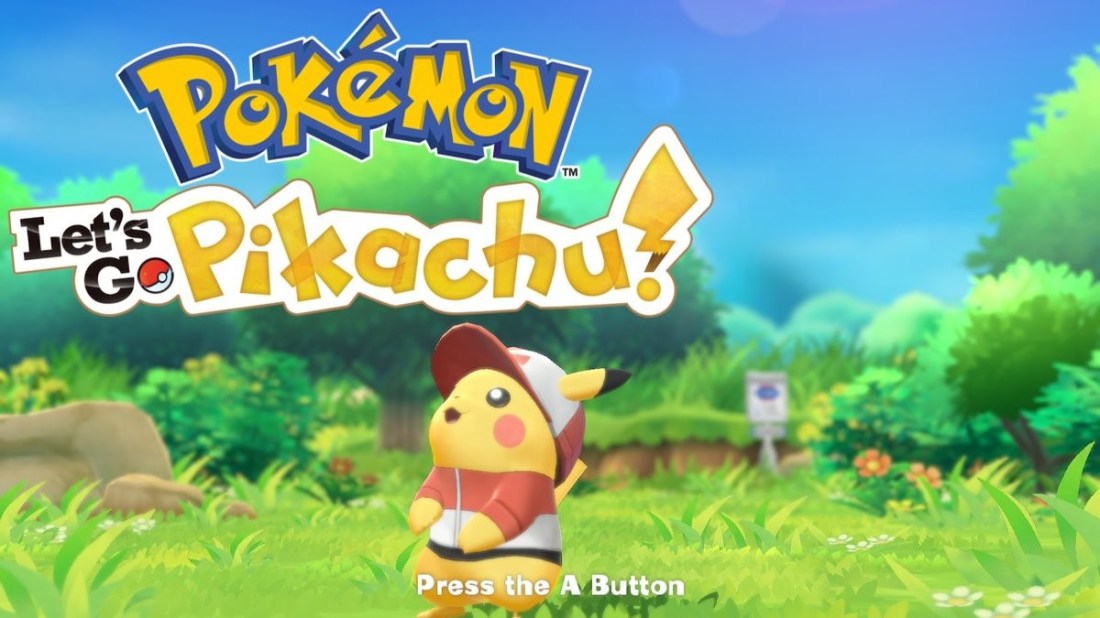
Pokémon Let’s Go Pikachu and Let’s go Eevee for the Nintendo Switch are a reimagining of the original generation of Pokémon games, seemingly taking the bulk of their inspiration from the third entry in that generation, Pokémon Yellow. This is not Game Freak’s first return to the Kanto region, but a return to the series’ roots feels like a good way to start the franchise’s life on Nintendo’s latest hardware.
Gameplay
Pokémon Let’s Go Pikachu and Let’s Go Eevee are more casual entries in the series, they could almost be looked at as a gateway for players who aren’t familiar with the core Pokémon RPGs. At their heart the Pokémon Let’s Go games are Pokémon RPGs, the town exploring, gym challenging, turn based battling and item collecting are all there but there are some substantial changes to the formula and some cut systems that the hardcore Pokémon fans may miss.
Regarding the plot, these games are very true to the originals, most of the story beats are the same, the only differences are minor such as the occasional nod to older games in the franchise as well as some other minor tweaks in the later parts of the game. Like in Pokémon Yellow the player doesn’t get the choice of the typical Kanto starters, Bulbasaur, Charmander and Squirtle, instead their starter is going to be either Pikachu or Eevee, depending on the version owned by the player. Also like in Pokémon Yellow the player’s partner Pokémon follows them around the over world persistently and can be interacted with freely.
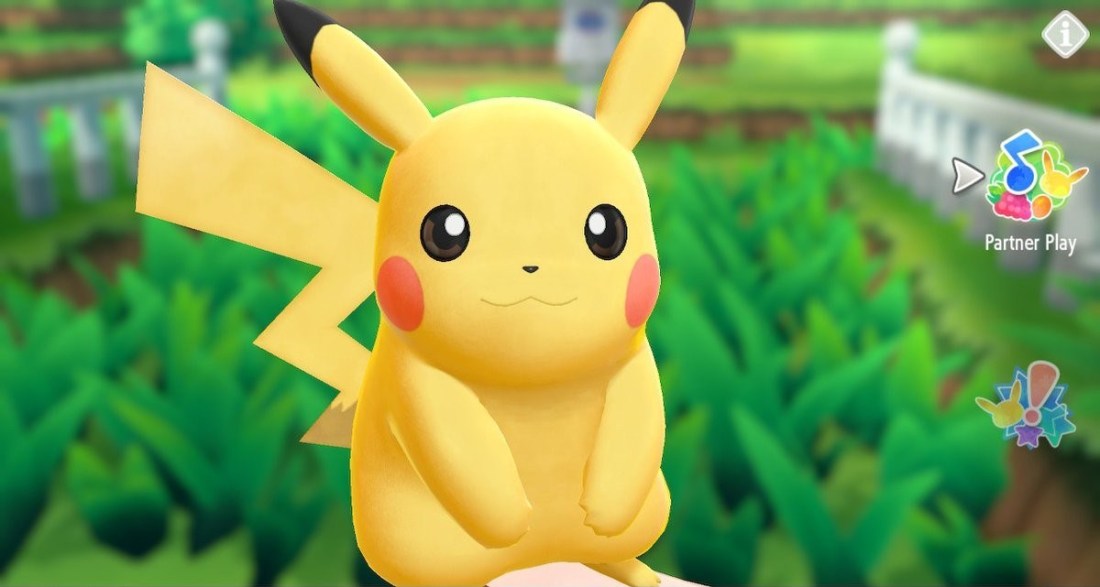
The player’s partner Pokémon can also be played with and fed berries in a mini-game like the Pokémon-amie feature introduced in Pokémon X and Y.
The first major change in the formula and one of my favourite aspects of Pokémon Let’s Go is the lack of random battles.
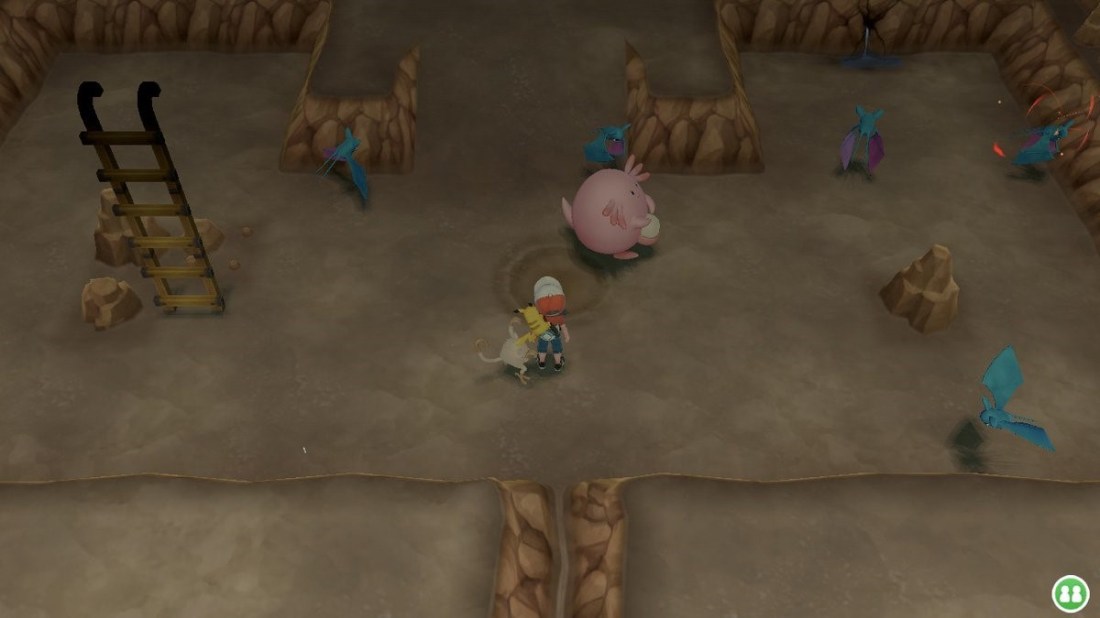
Wild Pokémon can now be seen wandering around the over world and the player can choose which of the available Pokémon they want to interact with and as someone who has been playing Pokémon since the original release of Red and Blue in the late 90’s, I think this is a breath of fresh air, I can now enter caves freely without the sense of foreboding that comes from the knowledge that at any moment I will be swarmed by a seemingly endless horde of Zubat.
The Pokémon capture loop has also been changed drastically, the battling of wild Pokémon has been removed in favour a more Pokémon go-esque loop using the switch’s motion controls. The player must aim the pokeball at a reticle made up of two rings, one white ring the is centered around the target Pokémon and one coloured ring that not only acts as an indicator of how difficult a capture it will be but also gets smaller and acts as a secondary target which will provide players with bonus experience and a boosted catch rate as it shrinks. This new system is a fun addition at least for the early portion of the game but as the Pokémon get harder to catch the novelty begins to wear off.
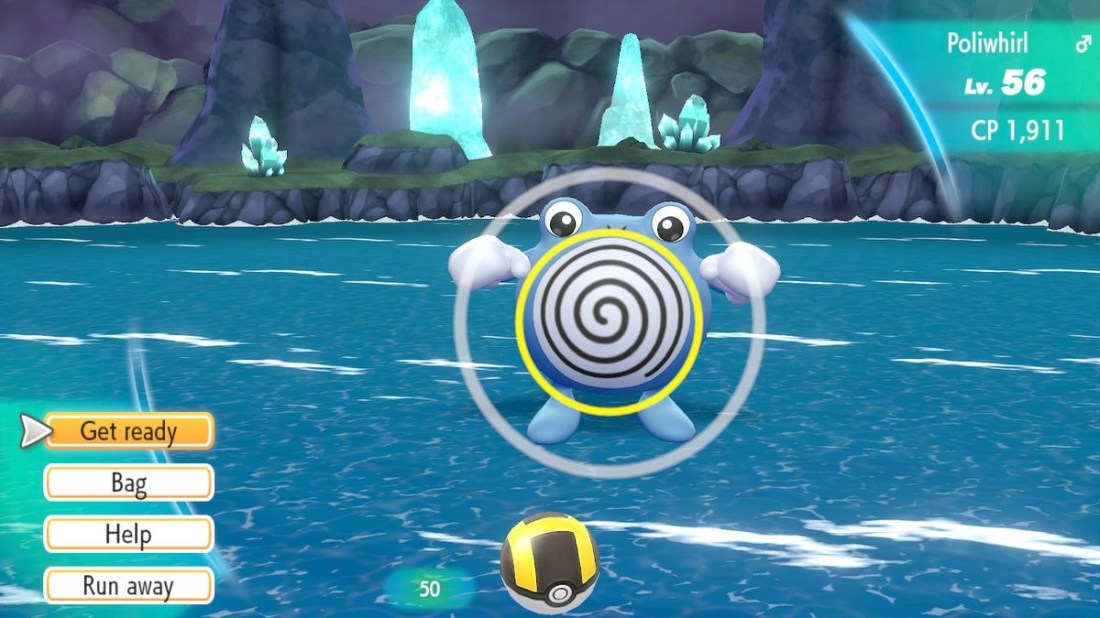
As with most examples of motion controls accuracy suffers, especially when the target Pokémon is off-centre, I’ve had many instances where the pokeballs have been thrown in complete random directions when trying to do a left or right toss and that’s without taking into consideration the power of the throws which sometimes will result in launching far over the targets head or simply dropping the pokeball like some cartoon depiction of a nerd trying to throw something. The only saving grace is that in handheld mode the game allows the player to use the stick to aim the pokeball but I can’t help but wonder why that functionality wasn’t included in docked mode as well. The next problem with the new capture system is the captures themselves, without the ability to weaken or inflict status conditions on wild Pokémon it feels more like a game of chance than it has in any of the other entries and can be infuriating to see your twelfth ultra ball shatter when trying to catch some random un-evolved Pokémon that shouldn’t be a difficult capture. The couple of ways the game provides to boost catch rates provided little to no assistance with this during my playthrough, so unless you have an incredible amount of luck expect to tear through your pokeball supplies regularly.
There are some exceptions to the capturing of wild Pokémon not requiring battling, these are mainly the legendary Pokémon found in the later stages of the game or the Electrodes found in the power plant.
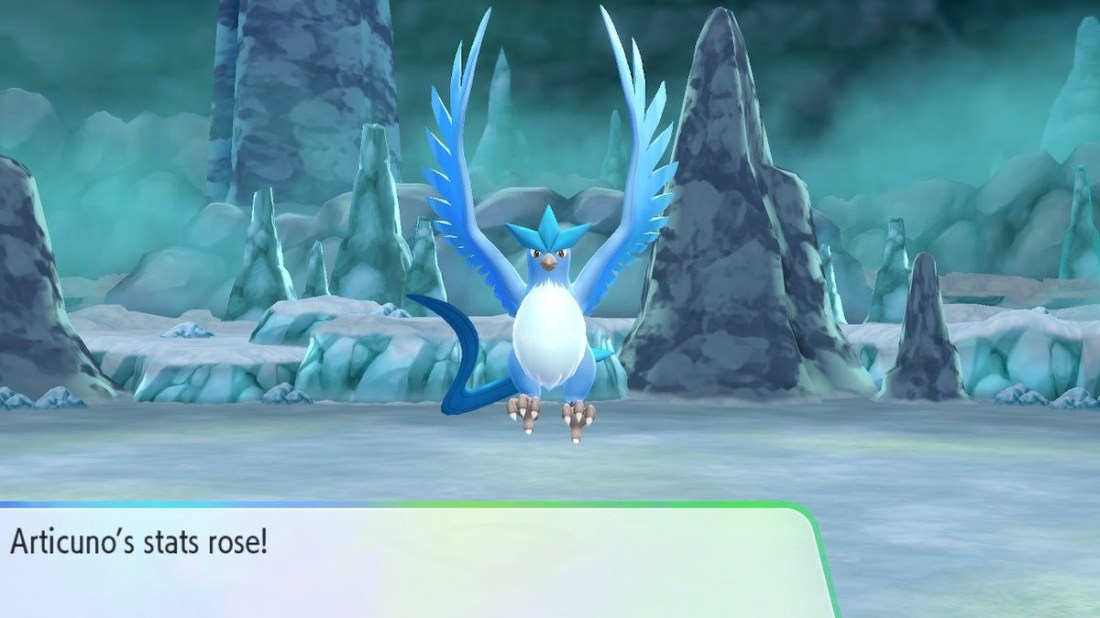
When encountering on these Pokémon, like Articuno, the player must defeat that Pokémon in a timed battle before they progress to the capture screen. These battles can be tough as the Pokémon employ stat boosts at the start of the battle, so it is important that the player’s chosen team are up to the task before challenging them.
The training of your Pokémon team is just as it was in previous entries in the franchise, particularly the more recent entries. All Pokémon in the player’s party will received shared experience for each capture and battle won by the player. One change to the training loop is that capturing Pokémon is now the fastest way to level the player’s party as capture chains and modifiers on a successful capture can net the player a substantial amount of experience depending on the rarity of the Pokémon. With just how much experience is available through captures and trainer battles I didn’t find myself needing to grind at all in the game, if anything I found myself significantly overlevelled in the later hours.
Graphics
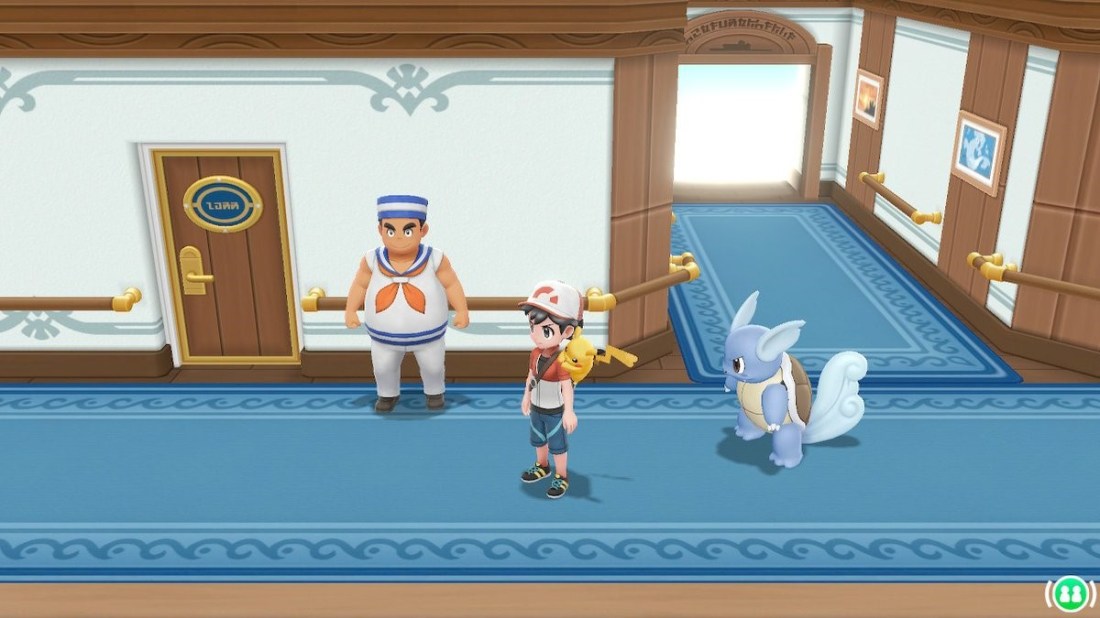
Pokémon Let’s Go Pikachu and Let’s Go Eevee are undeniably pretty games, they are faithful to the original versions of Kanto so with some exceptions most of important locations are exactly as they were, just with a new coat of paint.
Everything from the SS Anne to the Gyms spread throughout the game look stunning in 3D with their new, vibrant colour palette.
For the most part the game runs very well, battles flow smoothly and I rarely noticed anything in the way of frame drops even in the more populated areas.
Audio
The soundtrack from the games is a great source of nostalgia for veteran players as it is made up mostly of remastered music from the original games. The Pokémon have kept their original cries just like they have in the other Pokémon RPGs with the only exceptions being the title Pokémon, Pikachu and Eevee, who have been given their anime cries.
Replay Potential
Like most Pokémon RPGs the replay-ability of the game depends entirely on what the player is looking for, as always completionist players can work towards Pokedex completion, with only 153 Pokémon available for capture and training in the games it is a far less daunting challenge in this iteration. New to these games are master trainers which can be fought after beating the Elite Four, there is a master trainer who specialises in each of the Pokémon available in the game. The master trainers challenge the player to mirror matches with items disabled providing an extra challenge in the endgame.

Summary
Pokémon Let’s Go is a good Pokémon game for first time players but it lacks some of the deeper systems that would draw more hardcore players. It’s light hearted, colourful and a great nostalgia trip for veteran players even if it lacks the longevity of some other games in the series. The games bring some great new ideas to the table even if they are hampered by forced motion controls that can only be avoided in handheld mode.
Score
82/100
Pros
+ Graphically Pretty
+ Improved Pokémon encounters
Cons
– Forced Motion Controls
– Shallow Endgame
 The Gaming TechLits